
Speaker: Fritz Juengling Ph.D., AG®, AGL™
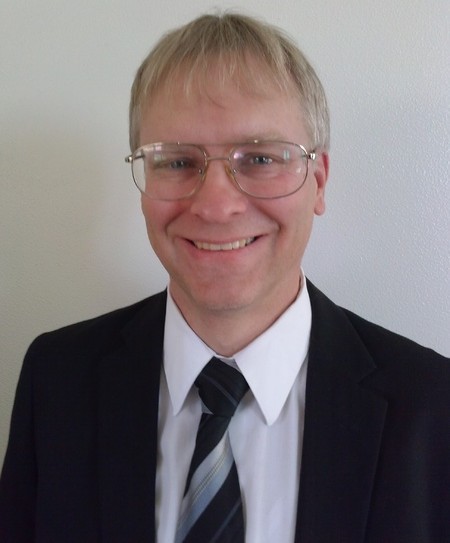
Areas of focus or expertise:
- Germany, Switzerland, Austria, The Netherlands, Belgium, Luxembourg, Denmark, Sweden, Norway, Alsace. German, Dutch, Scandinavian, and Latin handwriting.
- Topics: names, dialects, calendars and feast days, regional German, websites, guilds, historical events, among others.
Email contact: fritzjgen@gmail.com
Web/social media: https://www.fritzgenealogy.com/
Home: Bountiful Utah, USA
Native language: English
Presentation language(s): English, German
Preferred presentation type: virtual and in-person
Travel preferences: I will travel anywhere.
Biography
- German, Dutch, and Scandinavian Senior Research Consultant at the FamilySearch
Library in Salt Lake City, Utah - Accredited Genealogist® through ICAPGen for the following regions: Germany,
Switzerland, Austria, The Netherlands, Belgium, Luxembourg, Sweden, Denmark, Norway - Certification through the Verband deutschsprachiger Berufsgenealogen
- Ph.D. University of Minnesota: Germanic Philology with minors in both English and Linguistics
- MA University of Minnesota: Germanic Philology
- BA Western Oregon University: Secondary Education with Honors
- BA Western Oregon University: International Studies German Emphasis with Honors
- Nationale Handelsacademie, The Netherlands: Genealogie (Stamboomkunde)
- University of Minnesota Norwegian Language Proficiency Exam
Germanic Philology is a highly specialized field of study, combining languages, linguistics, paleography, and history. For my graduate degrees, I was required to demonstrate competence in English, German, Medieval Latin, and two other modern languages. I chose Dutch and Norwegian. I took courses in Old, Middle, and Early Modern English, Old and Middle High German, Old Norse (Old Icelandic), Gothic, Old Frisian, Old Saxon, Middle Dutch, history of the English, German, Dutch, and Scandinavian languages, Latin and Greek philology, Latin paleography, and Middle English paleography.
In which societies are you a member?
- The International Commission for the Accreditation of Professional Genealogists (ICAPGen)
- Verband deutschsprachiger Berufsgenealogen
- American Historical Society of Germans from Russia, Intermountain Chapter
Speaking experience/references
I have given over a hundred presentations all over the United States and in Germany. A list can be seen in links on my website.
Recording of previous presentation OR an IGGP partner you have presented for: I have presented to many societies, including:
- Germanic Genealogy Society, Minneapolis, Minnesota
- Sacramento German Genealogy Society: Sacramento, California
Payment/expense arrangements
How do you approach payment for making a presentation? I am willing to negotiate a speaking fee with clients.
Other expenses you would like to have reimbursed if you travel? Travel, room & board
Recordings/additional materials
Are you willing to prepare a handout? Yes
Would you be willing to develop a presentation on another topic? Yes
Do you have any restrictions on recording, re-use of recordings, handouts, etc? For members only and usually available for only 30 days after the presentation.
Are you willing to have the presentation translated or translate it yourself? Yes
Presentation topics
B=Beginning I=Intermediate A=Advanced E=Everyone. Click title to expand. I often create new presentations and am willing to create new ones for your organization.
English Language:
- Websites for German Research E
- Resources on FamilySearch for German Research B, I
- Learning to Read German Handwriting E
- German Phonetics and Spelling E
- German Dialects and What They Mean for the Researcher E
- A History of the Low German Language A
- German Names: Their Origins, Meanings, and Distribution E
- Names: their Origins, Meanings, and Peculiarities E
- Calendar Changes in German, Dutch and French Research E
- Calendars and Feast Days in U.S. and European Research E
- Historical Events that Affect German Genealogical Research E
- Historical Events: How they Affect your Genealogy Research (this covers more than just
Germany) E - The Genealogical Value of German Guild Records I, A
- Meyer’s Gazetteer Now Online, Indexed and Fully Searchable! E
- German Geography and Jurisdictions E
- Beyond the Obvious Reasons: Practical and Social Decisions for Emigration to America E
- Types of German Jurisdictions—What are Reichsland, Fürstentum, Herzogtum, Großherzogtum,
Königreich, and others? I, A - German Influence on American Culture E
- German Kings and Emperors and their effect on German history
- Some Tips for Genealogical Research B, I
- Witches, Horse Thieves, Soldiers, & Regicides: Who Were Your Ancestors? B
- Research in Pomerania B, I
- Historical Events that Affected our East Frisian Ancestors B, I
Germans from Russia B - Register of Swiss Surnames B
- Austro-Hungarian Empire Geography B, I
- Genteam.at: Website for research in Austria, the Czech Republic, Slovenia and Slovakia B, I
- Latin Handwriting E
- Netherlands Archive Spotlight: Friesland E
- Dutch Handwriting: Online Resources E
- Dutch Handwriting: Intermediate Documents E
- Learning to Read Dutch Handwriting E
- Dutch Religious Minorities and their Records E
- Beginning Dutch Research B
- The Huguenots in The Netherlands and South Africa E
- Using the Dutch Website Wiewaswie B
- Names in Belgium and the Netherlands E
- Beginning Research in Belgium B
- Beginning Research in Luxembourg B
- Gazetteers and Maps for Belgium, Luxembourg, and the Netherlands B, I
- Learning to Read Scandinavian Handwriting E
- Scandinavian Feast Dates and Calendars E
- Beginning Danish Research b
Using Censuses in the Danish Demographical Database B, I - Using the Danish Website Arkivalieronline B, I
- Danish Probate Records I, A
- Swedish Feast Dates and Calendars E
- Learning to Read Swedish Handwriting E
- Resources on FamilySearch.org for Swedish Research and Getting Help B, I
German Language:
- Wie bekomme ich Hilfe von zu Hause? Ressourcen in FamilySearch B, I
- Paläographie: Alte deutsche Schrift E
- Daheim mit deutschen Urkunden: Archion und Matricula B, I
- Deutscher Einfluß auf amerikanische Kultur E