
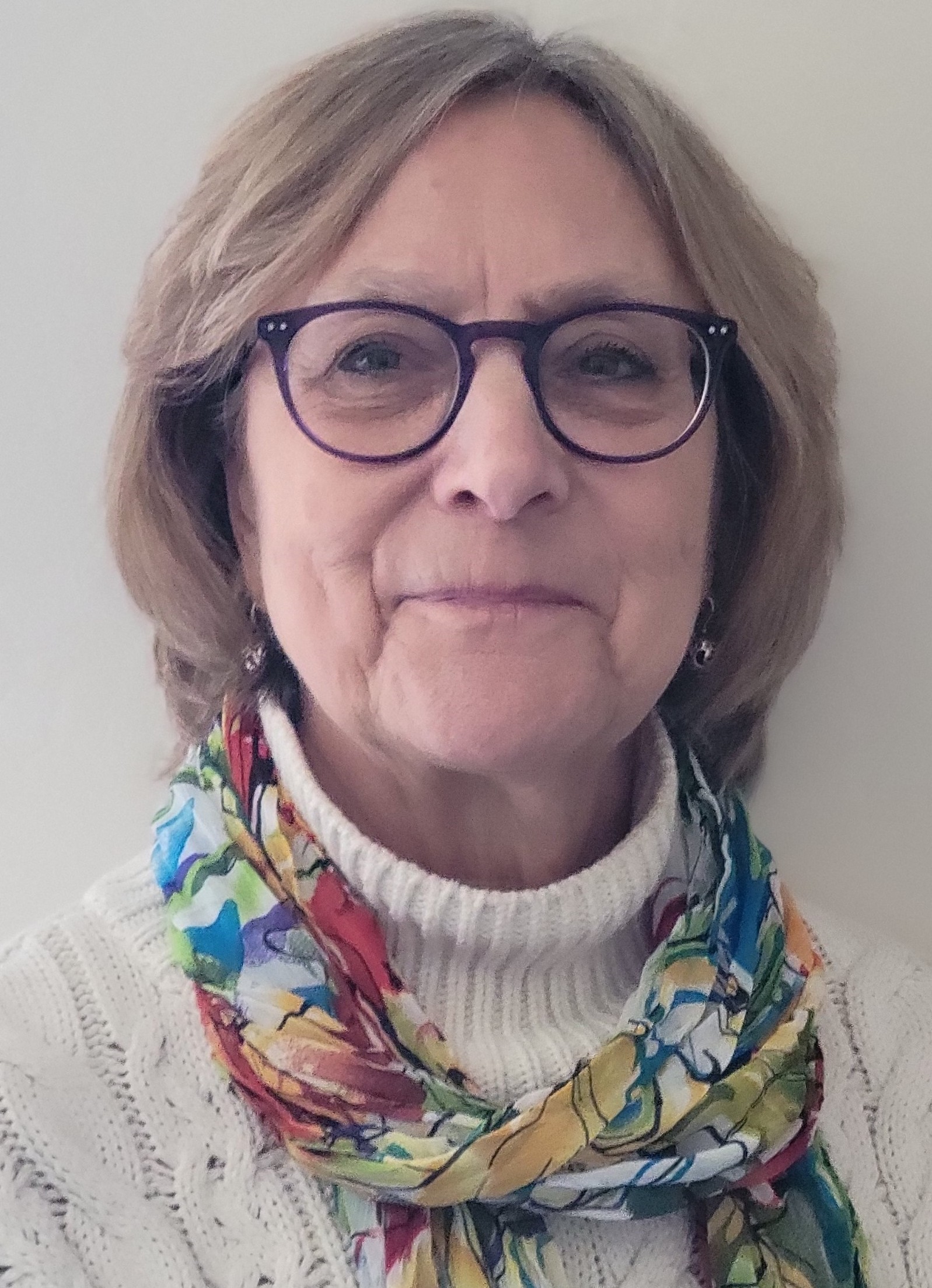
Speaker: Mary Risseeuw
Areas of focus or expertise:
- My personal research involves 19th and 20th century Dutch immigration to the U.S. and uncovering untold women’s stories. I lecture, write and teach classes on a wide range of genealogical topics.
Email contact: mrisseeuw@yahoo.com
Web/social media: none provided
Home: Sheboygan Falls, Wisconsin, U.S.
Native language: English
Presentation language(s): English
Preferred presentation type: virtual and in-person
Travel preferences: I would be willing to travel within the U.S. and also out of the country.
Biography
Mary Risseeuw is an independent historian, professional genealogist, writer, lecturer and artist. She has researched 19th & 20th century Dutch immigration for over 35 years. She has published and lectured throughout the U.S. and the Netherlands.
Some of her publications include: A Phoenix Sesquicentennial Tribute: 1847-1997 (1997), I end with my pen, but not with my heart: Dutch immigrant letters, memoirs and travel journals, Editor/compiler, (2008), Diverse Destinies: Dutch Colonies in Wisconsin and the East, Editor and contributor, (2012), Dutch Reformed Education: Immigrant Legacies in North America, contributor (2020), E Pluribus Unum: The Weaving and Unraveling of a Singular “Dutch American” Identity in North America, contributor, (2024). She serves on the Board of Directors of the Association for the Advancement of Dutch American Studies.
In which societies are you a member? National Genealogical Society, Wisconsin State Genealogical Society, Association of the Advancement of Dutch American Studies
Speaking experience/references
-
“Nellie was a Rebel: Using Unusual Sources to Find Her Child’s Father,” Appleton Public Library, Appleton, WI June 2026
-
“Catholics v. Protestants: Assimilation and Integration of the Dutch in the Midwest” Midwestern History Association, Miami University, Oxford, OH April 2026
-
“Collars to Khakis: the History of Vestments in the RCA,” Poppen-Young Fellowship Lecture, New Brunswick Theological Seminary, April 2026
-
“Dutch in Wisconsin: Assimilation vs. Integration,” Sheboygan County Historical Museum, March 2026
-
“German Immigrant Letters, Memoirs & Travel Journals,” Southern California Genealogical Society, Jan 2026“Society Briefs, Village News…or the other Gossip Columns,” Wisconsin State Genealogical Society, Nov 2025
-
“Wisconsin Historical Society,” Southern California Genealogical Society, Nov 2025
-
“The Use of DNA in Genealogy and Family History Research,” Carroll University, Waukesha, WI, Oct 2025
-
“Wisconsin Historical Society,” Appleton Public Library, Appleton, WI, Oct 2025
-
“Michigan, Iowa, and Wisconsin: Dutch colonies in the mid-1800s,” Wisconsin State Genealogical Society Conference, Manitowoc, WI, Oct 2025
-
“Tragedy of the Phoenix: A Ship Disaster in Lake Michigan,” Wisconsin State Genealogical Society Conference, Manitowoc, WI, Oct 2025
-
“Society Briefs, Village News…or the other Gossip Columns,” Utah Genealogical Association:Summit of Excellence, September 2025
-
“Immigration from Zeeland, Netherlands,” Oostburg, WI, August 2025
-
“Wisconsin’s Dutch Refugee Relief Act of 1953,” Association for the Advancement of Dutch American Studies, Holland, MI, June 2025
-
“Unraveling the Mysteries of Your Female Ancestors,” New Brunswick Theological Seminary, New Brunswick, NJ, May 2025
-
“Teachers, Healers & Mothers: Married Women in Missions,” Gnade Fellowship Lecture, New Brunswick Theological Seminary, New Brunswick, NJ, Mar 2025
-
“400,000 German POWs in the U.S.: How did they affect your community and family,” Wisconsin Genealogical Society, Nov 2024
-
“Nellie was a Rebel: Using Unusual Sources to Find Her Child’s Father,” North East Ohio Computer Aided Genealogy Group, Oct 2024
-
“Nellie was a Rebel: Using Unusual Sources to Find Her Child’s Father,” Minnesota Genealogical Society, August 2024
-
“Genealogy of a Neighborhood: Urban & Rural,” Genealogical Society of New Jersey, May 2024
-
“Michigan, Iowa, and Wisconsin: Dutch colonies in the mid-1800s,” Cedar Grove Public Library, Cedar Grove, WI, April 2024
-
“400,000 German POWs in the U.S.: How did they affect your community and family,” Ohio Genealogical Society, April 2024
-
“Tragedy of the Phoenix: A Ship Disaster in Lake Michigan,” Ohio Genealogical Society, April 2024
-
“Michigan, Iowa, and Wisconsin: Dutch colonies in the mid-1800s,” Ohio Genealogical Society, April 2024
-
“Dutch not Deutsh: the forgotten Dutch in Cincinnati and Cleveland,” Ohio Genealogical Society, April 2024
-
“Unraveling the Mysteries of Your Female Ancestors,” Roots & Branches Genealogical Society Of WVC, DeLand, FL March 2024
-
“Hidden Stories of RCA Women,” Albert A. Smith Fellowship Lecture, New Brunswick Theological Seminary, New Brunswick, NJ February 2024
Recording of previous presentation OR an IGGP partner you have presented for:
- “400,000 German POWs in the U.S.: How did they affect your community and family,” International German Genealogy Partnership Conference, June 2023
- “German Immigrant Letters, Memoirs & Travel Journals,” International German Genealogy Partnership Conference, June 2023
Payment/expense arrangements
How do you approach payment for making a presentation? I am willing to negotiate a speaking fee with client.
Other expenses you would like to have reimbursed if you travel? Travel (by air or car) and hotel expenses.
Recordings/additional materials
Are you willing to prepare a handout? Yes
Would you be willing to develop a presentation on another topic? Yes
Do you have any restrictions on recording, re-use of recordings, handouts, etc? I provide a handout that is accessible to all who attend a lecture. I would permit recording that is only available for a limited time to members of the society.
Are you willing to have the presentation translated or translate it yourself? Yes
Presentation topics
Click title to expand. Both of these lectures are suitable for all levels of expertise and would be presented in English.
400,000 German POWs in the U.S.: How did they affect your community and family?
For millions of rural Americans, farmers and owners of small businesses, POW labor was a life-saver for a country where a labor shortage had been created by the war. Abandoned Civilian Conservation Corps camps built during the Depression were the sites of the first camps as boat loads of German POWs were brought to the U.S. There were over 1.000 camps established throughout the country. This had a huge effect on the communities where these camps were located. The stories of the interactions between prisoners and civilians and their impact were not talked about for decades. The stories are still being uncovered.
German Immigrant Letters, Memoirs and Travel Journals
Letters, memoirs and travel journals are a rare primary source that is often overlooked in understanding the experiences of immigrants. These letters were generally written by ordinary immigrants. They are a genuine source of information about America for families and the communities who had to deal with the effects of emigration on the other end. Through these letters, emigrants and their families compared life abroad to the life they left behind. They contain details about every situation the immigrant finds himself in: the choice of a place to settle, his neighbors, his land, finding employment, the difficulties with language, loneliness, and questions about citizenship, church membership, political parties and war. When correspondence from different populations is examined, one can gain more insight into the variations in cultural practices, expectations in a new world, and an overall worldview. Economic concerns and family news are often the most highlighted topics. Letters were also written solely to encourage emigration.