
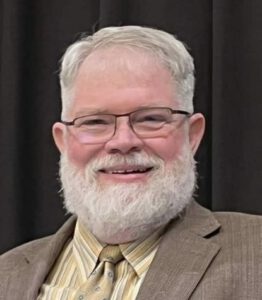
Speaker: Warren Bittner
Areas of focus or expertise:
- German immigrants to the U.S.
- German History
- Research in German Archives
- German Handwriting
Email contact: bittnerfw@gmail.com
Web/social media: https://www.facebook.com/warren.bittner/
Home: Centerville, Utah, USA
Native language: English
Presentation language(s): English
Preferred presentation type: Virtual and in-person
Travel preferences: Anywhere
Biography
F. Warren Bittner, MS (History), is a genealogical researcher, educator, and author. He is a professional researcher accepting private clients and specializes in German and German Immigrant research. He is former owner of an independent research firm, and previously worked for the Family History Library as the German Collection Manager, Extraction Specialist, and Research Consultant.
Warren has coordinated German research courses for the Salt Lake Institute of Genealogy (SLIG), the Institute of Genealogy and Historical Research (IGHR), and the Genealogical Research Institute of Pittsburgh (GRIP). He is coordinating a course this summer (2023) titled “Intermediate German Research” at the Genealogical Research Institute of Pittsburgh.
He has lectured widely at national conferences and society events, and is published in the National Genealogical Society Quarterly. His article, “Without Land, Occupation, Rights, or Marriage Privilege: The Büttner Family from Bavaria to New York” received the National Genealogical Society Award for Excellence.
Warren is known for his extensive research in German and US archives and repositories, Swiss records, and his expertise in late nineteenth-century New York City research. He is a former trustee for the Board for Certification of Genealogists, served on the board of directors for the Utah Genealogical Association.
In which societies are you a member? National Genealogical Society
Speaking experience/references
I have given over 200 lectures around the U.S.
Recording of previous presentation OR an IGGP partner you have presented for: https://familytreewebinars.com/speaker/warren-bittner/
Payment/expense arrangements
How do you approach payment for making a presentation? I am willing to negotiate a speaking fee with clients.
Other expenses you would like to have reimbursed if you travel? Airfare, Hotel, Food, Incidentals
Recordings/additional materials
Are you willing to prepare a handout? Yes
Would you be willing to develop a presentation on another topic? Maybe
Do you have any restrictions on recording, re-use of recordings, handouts, etc? Yes, but I am willing to negotiate
Are you willing to have the presentation translated or translate it yourself? Yes
Presentation topics
All lectures are in English. Click title to expand.
Beat the Children with a Fresh Birch Stick so the Animals Don’t Get Worms—Reading for Historical Context
This is an enlightening dive of how to use books about the cultural, political, social and occupational history to understand the lives of your ancestors. Read to explore your ancestors in their own world on their own terms. See examples from some fascinating books and learn the origin of the title quote.
On-site Research in German Archives
An amazing number of untapped records survive in German Archives. Learn to find the records for various regions. Successful research can be done at German archives with limited German language ability.
German Calendars and Symbols
Explore the various calendars that appear in German records: the Roman Calendar, the Julian and Gregorian Calendars, and the Liturgical Calendar. Also, learn the various symbols used in church books.
Reading German Script I
We will work together to learn to read German script. The first hour focuses on upper-case letters. We’ll memorize how the letters are formed and how to distinguish easily confused letters.
Reading German Script II
More of the same with lower-case letters. German handwriting is troublesome with seven forms of the letter S; H’s that look like F’s; E’s that look like N’s; P’s that look like nothing ever seen before; and R’s that are just plain upside down. Hang on for the ride, this one is fast and furious.
German Script Workshop – Given Names
The easiest way to learn old German script is by deciphering names. This class will give students practice reading given names
Introduction to German church books
In this two-hour class learn the basics of ready German baptism, marriage, and death records.
The Fisherman who Wanted to Marry the Executioner’s Daughter
Explore the wide range of German marriage sources usually overlooked by genealogists and the stories they contain.
Ortsfamilienbücher [village genealogies] — Valuable Resource in German Genealogy
Students will learn about these books, which are available in many areas of Germany. They will learn the abbreviations and symbols used, and will see how to reconstruct multiple generations of a family.
Pity the Poor Pfuhl: Proving an Immigrant Identity
Follow a case from the American Midwest to identify the place of origin in Germany using a variety of techniques
German Published Sources
Examine little-known and underused published sources of genealogical information. Learn how to access them and use them.
Meyers Gazetteer
Students will learn to read and interpret Meyers Gazetteer and its many abbreviations and
symbols. Many German genealogical databases use jurisdiction locations as they are listed in Meyers. Meyers is also an important tool in differentiating between multiple villages with the same name.
How German History Makes a Difference in Your Family History Research
This quick review of German history reviews the major events that affect research and genealogical document. This two-hour lecture covers two semesters of German history – hold onto your seats.
Elusive Immigrant!
Students will follow a case where the Elusive Immigrant leaves multiple independent sources giving an exact place of origin in Germany. However, when records of that locality are searched the immigrant is nowhere to be found. Learn techniques in German sources to prove immigrant identities.
German Marriage Customs and Records
Students will learn about a series of customs that surrounded marriage in various areas of Germany and be introduced to a wide variety of records created at the time of marriage.
Document to Narrative: Writing to Engage your Reader
Students will learn to take a dull stack of documents and turn them into an interesting story.
Bads, Bergs, Burgs, and Bachs
Learn about a broad scope of records used to identify villages in Germany: Maps guides to German parish registers; reverse sorts; Kartenmeister; Genealogy.net; parishes in archives.
German Maps and Territories
Learn micro and macro changes to the map of Germany. Find how understanding nobility regions can help research.
German Research and the Law
The individual estate, the territorial state, tenants and land, das alte reich, the French Revolution, the civil state, Germany after 1871, German inheritance laws.
Proving Immigrant Identities—Once in Europe, Then What?
See the Genealogical Proof Standard applied to research on both sides of the Atlantic to prove the identity of an immigrant not found where she is supposed to be and whose name is anything but certain.
Unreasonable and Exhausting — The Impossible Immigrant
Wrong information, multiple dead ends, and one brick wall after another, make finding immigrant origins for one man, almost impossible.
Indirect Evidence – What It Is. How It Works. And Why it Matters
A genealogist’s goal is to establish identity and prove relationships; Indirect evidence is the ONLY way to do this. Follow a case study of clues from multiple sources to solve a problem.
The Bittner Bastards of Bavaria
See new light on nineteenth century morality. How common was illegitimacy and marital pregnancy? What forces influenced its occurrence? What historical demographers have found. Includes an engaging case study.
Proof Arguments - How and Why
Learn how to write proof arguments to describe your conclusion and why they matter.